MAHJONG: A Bridge Ritual Night
Tuesday, April 28 • 7:30 PM - 9:30 PM • 17 Macdougal Street, Brooklyn, NY
there are places in bed-stuy that are more than businesses. uncle chin’s bar is one. he arrived from nigeria thirty years ago. four years ago, he built this place from scratch.
i call him uncle because tone called him that, out of respect. it is something older than resemblance, something i recognized before i could explain. it belongs to a grammar that many immigrants know in their bodies long before they know how to describe it in language.
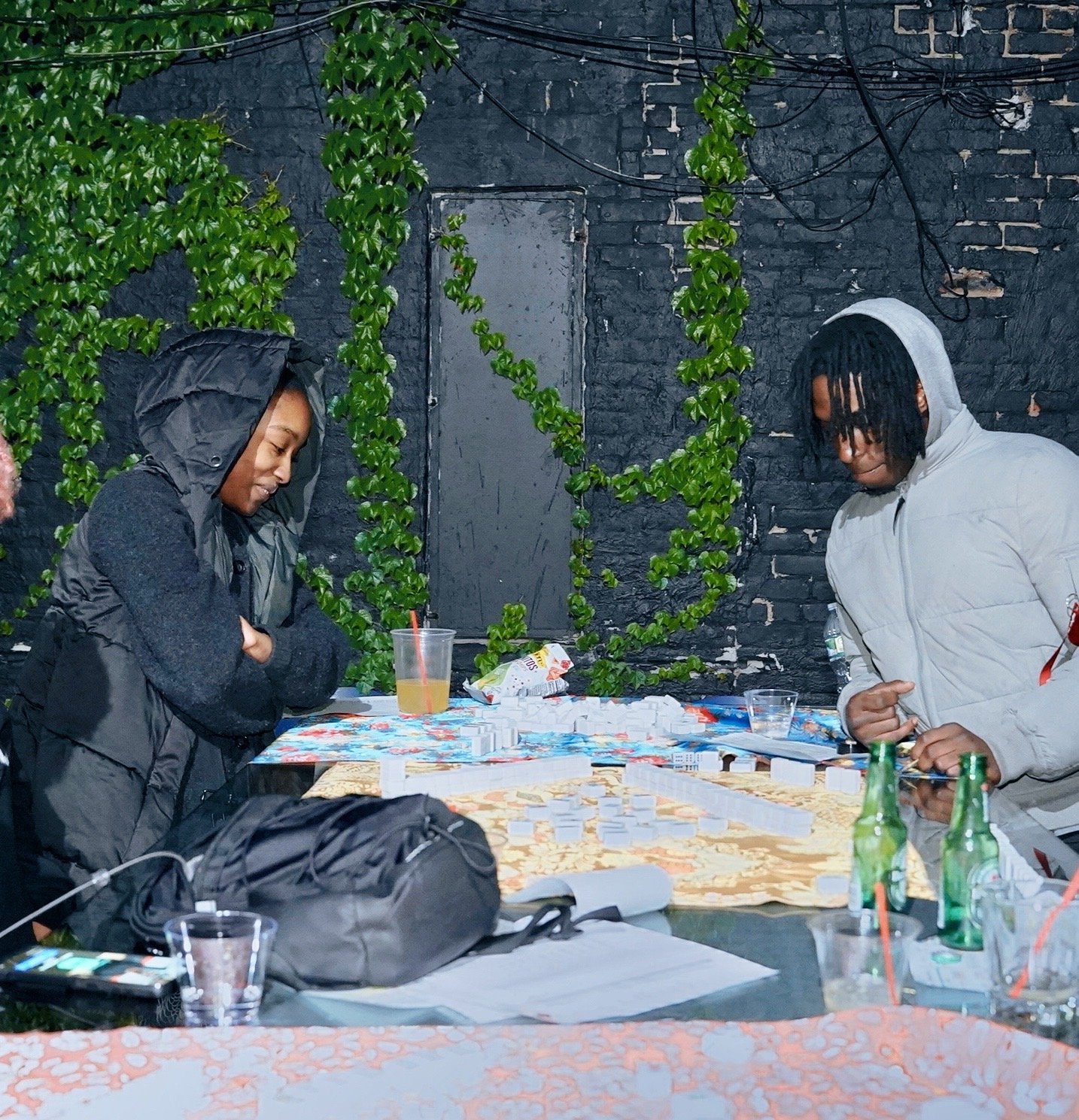
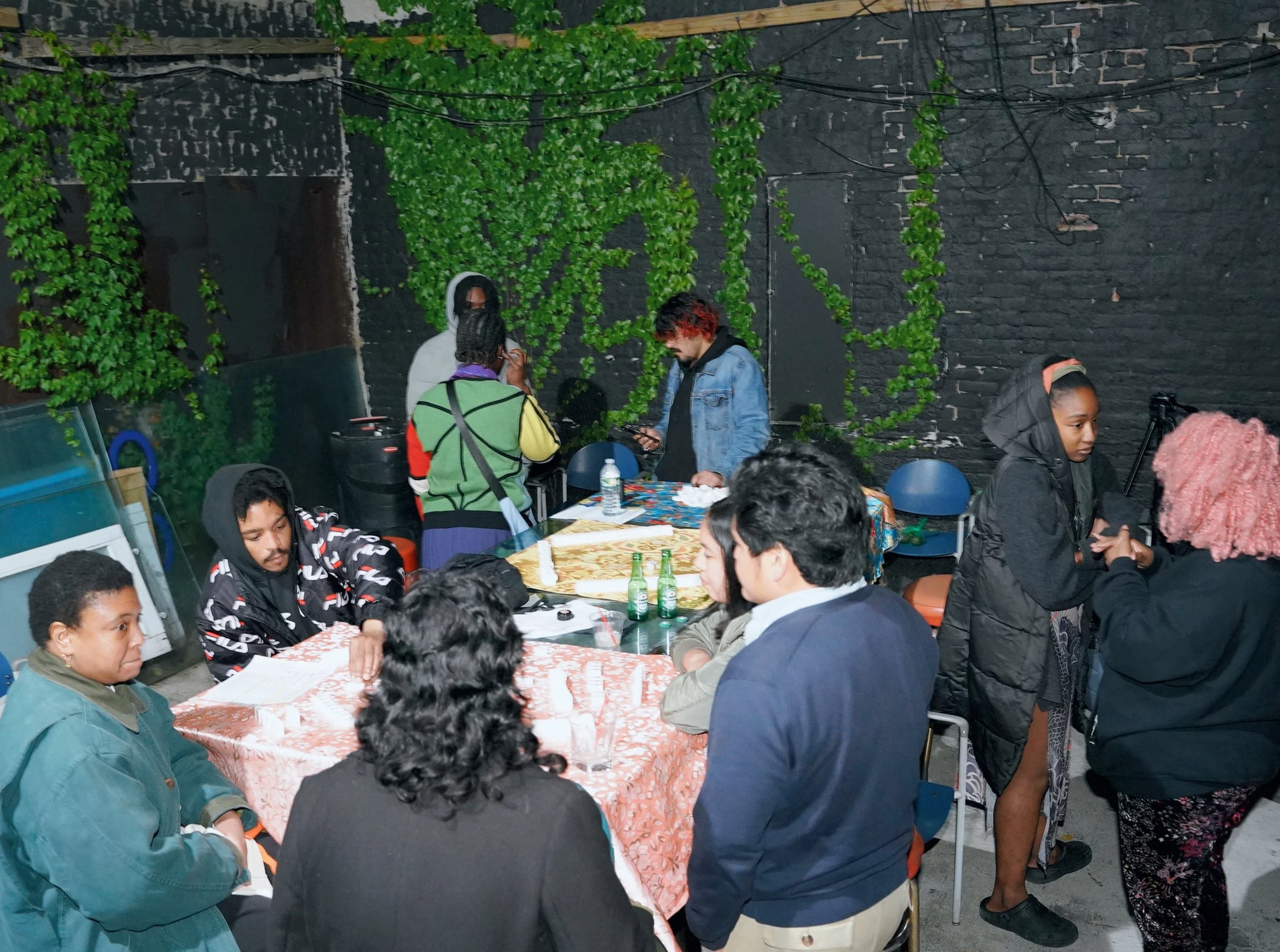
but before i speak of his warmth, i want to speak of his labor. he made this place with his own hands. literally, piece by piece. he polished the long bar counter by hand. he made the plant wall in the front. he built the structure in the backyard. everywhere in the space one senses effort that has passed through the body first: sanding, lifting, arranging, rethinking, trying again. he made an environment.
there is something in this that feels very familiar to me. immigrants are often left to rely on themselves in ways that become so complete they seem natural. one learns because there is no other choice. one becomes a builder, designer, repairer, accountant, cleaner, host, translator, all in one life. there is no one role. there is only what must be learned for the thing to survive. uncle chin’s creativity is everywhere in the room.
and this room, made with such effort, has become a small gem in the neighborhood.
what moved me, perhaps more than i expected, was seeing how well this creativity had been received by local musicians. i did not know the bar until i went there for a women’s performance night organized by soluna. that was my first entry into the space. afterward, i came to know about od and the wednesday gatherings there. i began to return. what astonished me was the aliveness of it, and how unguarded. people gathered, sang, shared songs, rapped back and forth as if conversation had found a better medium than words alone. a room that had become, through repetition, a vessel.
i found myself unexpectedly grateful for that community. my own life has been marked by wandering. so to enter a room in bed-stuy and find it already warm with music, and to be received without having to perform my strangeness, moved me more than i could say at first.
some part of the local black community has sheltered my diasporic body in this neighborhood. care travels sideways here, between bed-stuy people and diasporic people like uncle chin and me, across histories that do not overlap but somehow recognize each other. displaced people know this kind of recognition. it does requires only that someone has also learned, somewhere, what it costs to leave.
one evening, there was no performance. i hung out with my friend sasha at the bar. we were the only customers there. the room, in its near-emptiness, seemed to hold a kind of vulnerability. uncle chin heated some fried fish and insisted on sharing it with us. he kept asking me to eat, just as my uncles back home do. the gesture was so familiar that it passed through me almost before i could think about it. their way of loving is often like this: they worry, always, that you have not eaten enough, as if every meal must answer an older anxiety.
later, sasha ordered a drink. i told uncle chin i was not drinking these days. so he made me a mocktail. but the way he made it startled me with its tenderness. he poured different syrups into the glass and did not dilute them with water or seltzer. the drink tasted almost like candy. i felt that i understood it immediately.
i thought of my grandparents. my parents’ generation. lives shaped by the arithmetic of scarcity. sugar, in that world, is never incidental. sweetness is precious. to give someone sweetness is to offer them a concentrated form of hope. they wanted me to eat food, to be healthy, and strong. they wanted me to taste sugar, to be happy.
and perhaps this is part of what we carry when we leave home—the love language formed in scarcity, still fluent in the body long after the conditions that shaped it have changed. we go in search of abundance. but the gestures through which we imagine abundance remain. feed the person. make them full. give them sweetness. do not let them leave empty-handed.
that mocktail has stayed with me for this reason. it seemed to contain, in a small and almost comic way, a whole emotional history. a wish, offered through syrup, that life should be a little sweeter than it has been.
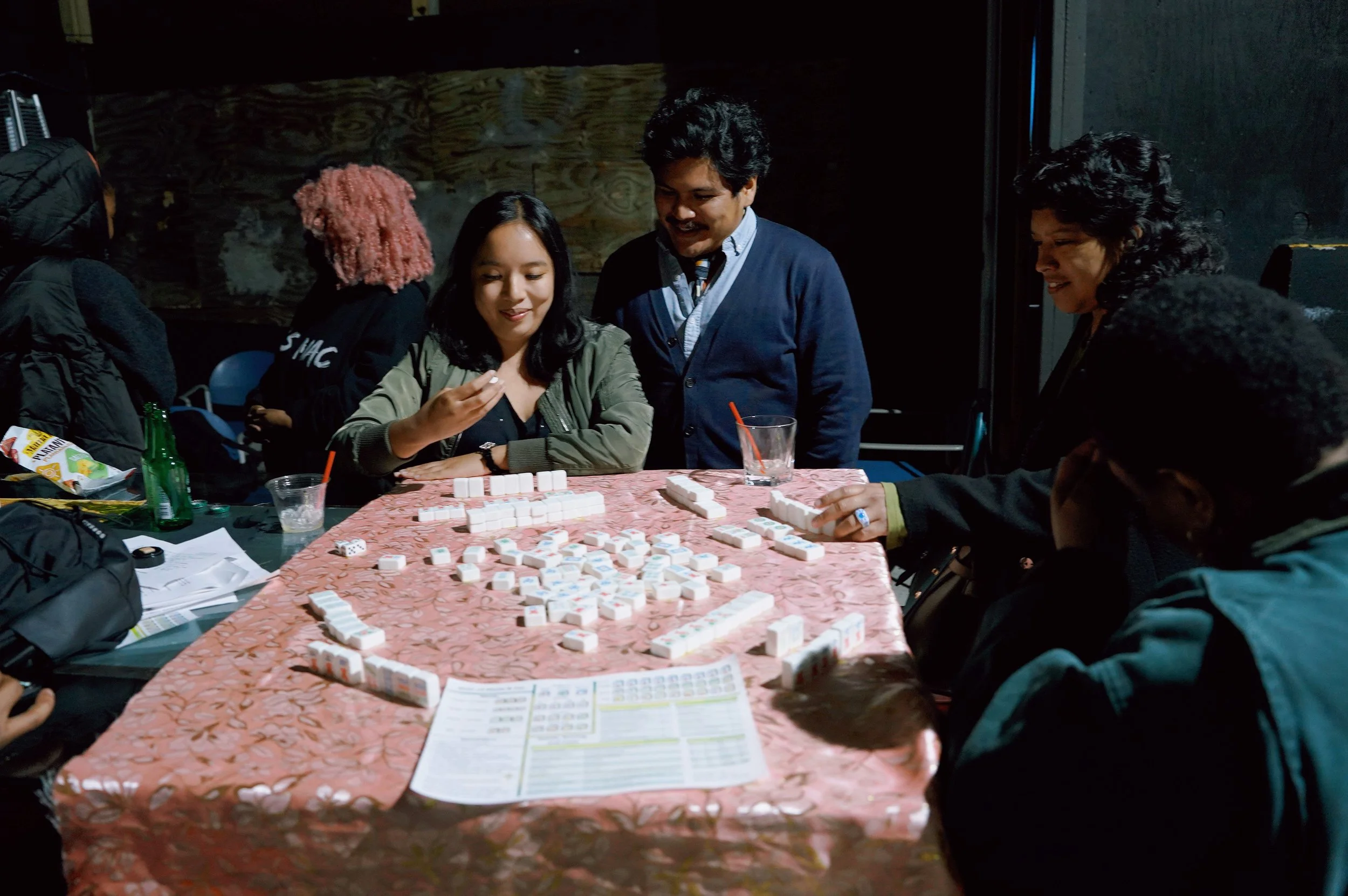
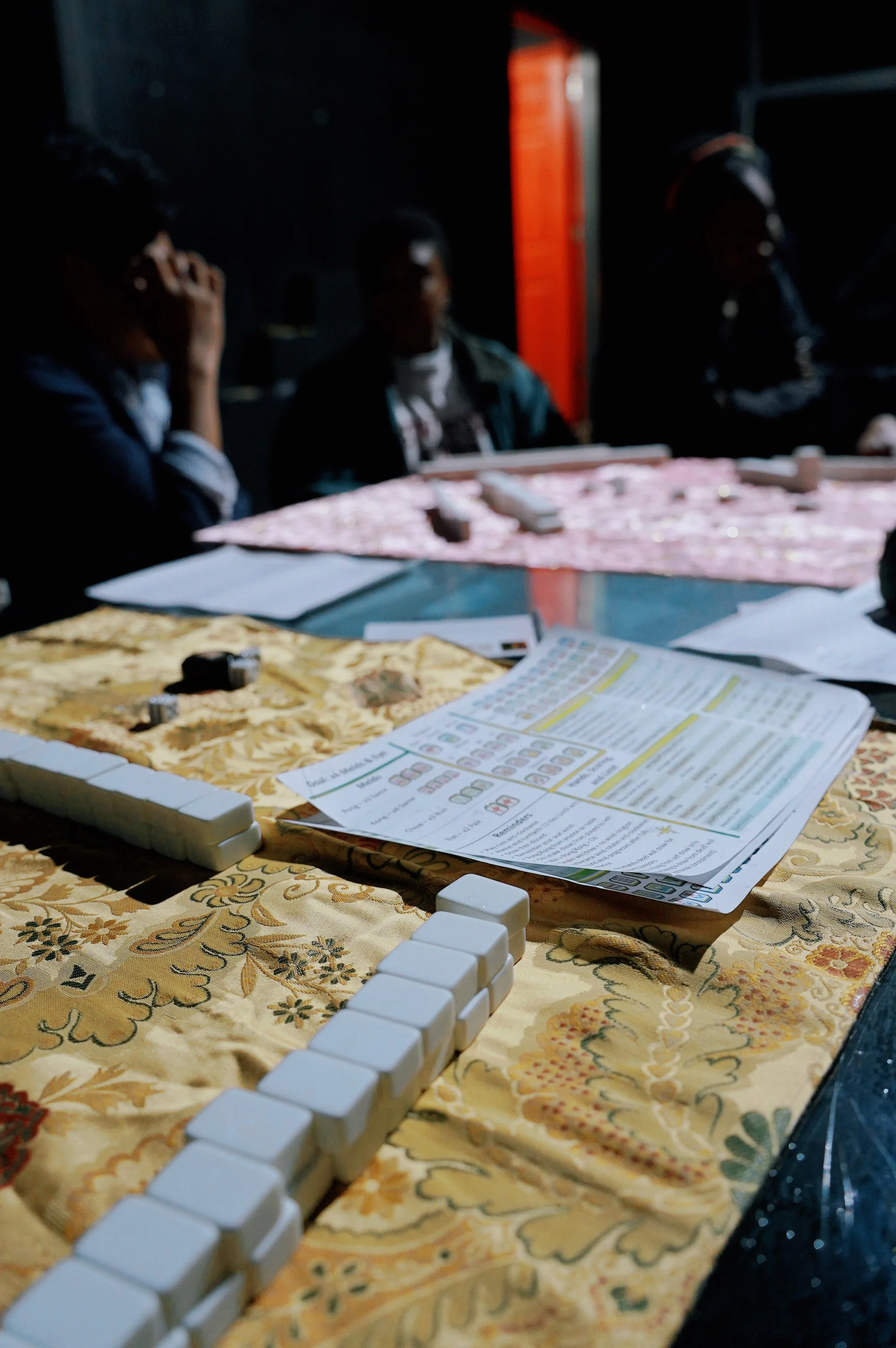
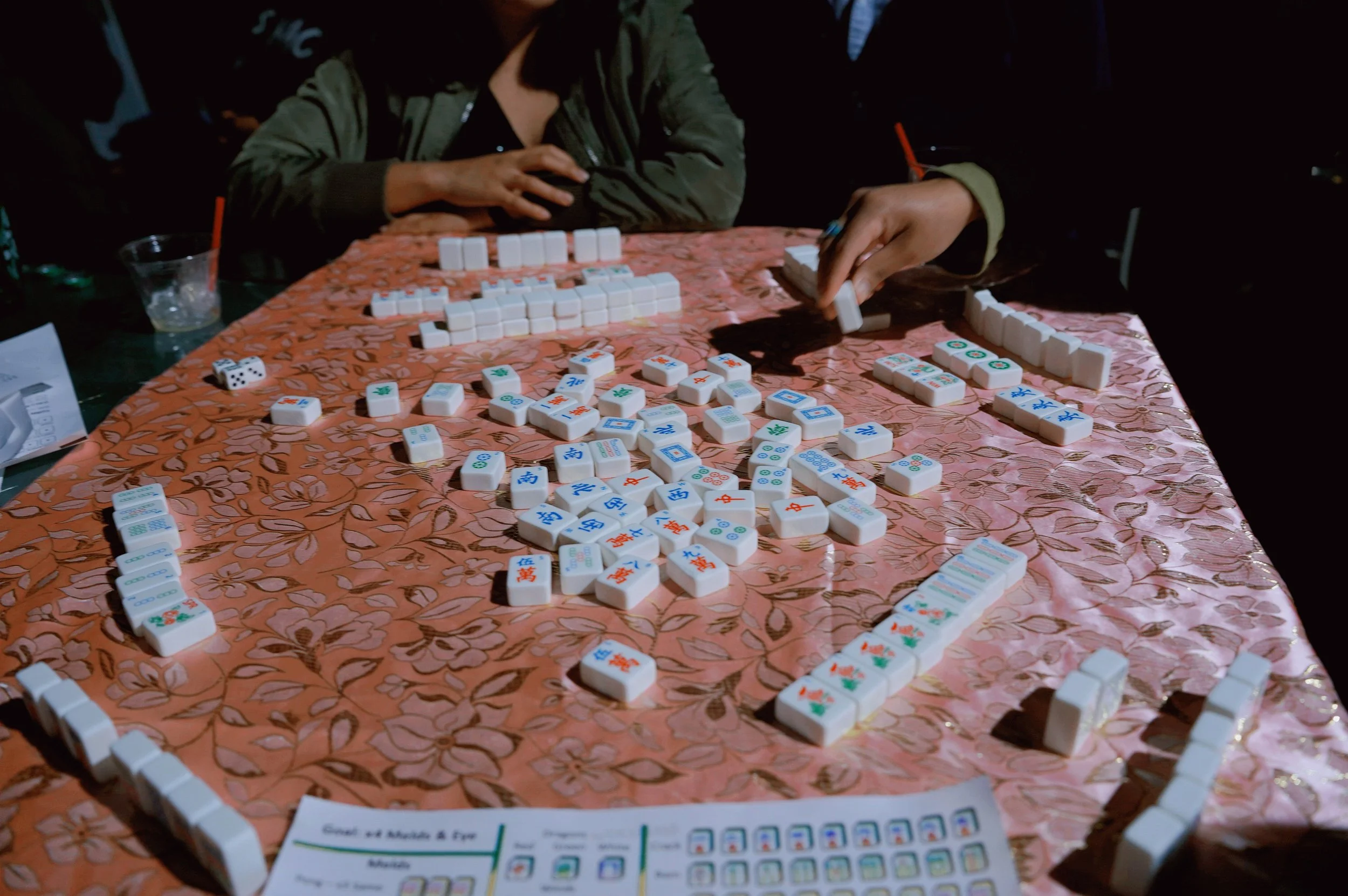
I began to imagine starting a mahjong social change club in uncle chin’s bar.
mahjong, to me, is beyond leisure. it is a social form that creates proximity and negotiated coexistence. it does not itself create justice; it enables conditions in which trust and mutual obligation become more possible. it allows people to stay in the room.
bed-stuy is historically a black neighborhood, and that history matters profoundly. one must begin here, with a kind of listening: dense black social structures—stoops, churches, salons, barbershops, mutual aid, music, and local rituals of watching out for one another. bed-stuy does not need an outside script of community.
it would be a mistake to arrive in bed-stuy with the idea that one is bringing community to it. the community is already here. it has been here for a long time. what one might humbly hope to offer is something more modest: a few additional forms through which people living parallel lives might occasionally enter a common rhythm.
so, a mahjong table in uncle chin’s bar would possibly be a small addition to an already living neighborhood grammar. if introduced carelessly, it could become exactly the wrong thing: a fashionable asian object or a shallow diversity performance. but if with patience and hospitality, placed in conversation with the neighborhood’s already existing forms of black, caribbean, african, and immigrant social life, it might become something else.
solidarity matters, i think, within the long and unfinished relation between black communities and immigrant communities of color in this country. this is an old conversation and, in many ways, an unresolved one. these communities have often been placed in competition with one another, even as the city extracts labor from each and renders each vulnerable in ways that turn out to be more interconnected than they appear. racial capitalism, one begins to understand, is very good at arranging things so that interests that ought to converge instead come apart.
it is here that mahjong begins to hold a certain political interest. it does not resolve the histories that weigh on these relations, nor does it soften the realities of anti-Blackness or xenophobia. those histories are real. they must be faced directly, with the kind of honesty. what it does offer is a small, repeatable situation in which people sit long enough to register one another differently. a moment in which abstraction gives way, however briefly, to attention.
i want to teach people for free: long-time neighbors, immigrants, people of color, anyone curious enough to sit down. but I also want to ask those who come to support the business: commit to buying at least one drink. it acknowledges that if we gather in a place sustained by someone else’s labor, then that gathering must return something material. care cannot remain only emotional. to mean anything, it must take form.
ultimately, i have come to think justice is not built solely through demands made of the state. it is also built through forms that prepare people to remain present to one another.
and in this case, one more thing: a bar already practicing a form of care the city does not know how to count.
in the end, a mahjong table in his bar would not change the world in any grand or immediate way. but it might alter the scale at which the world becomes livable, through the stubborn making of places where people can still build with their hands, shelter one another’s memories, and remain.